

The wisdom of small packaging: With the rise of pre-cooked and pre-cleaned vegetables, how to choose the right fruit and vegetable packaging bags?
Nov 11, 2025
With the fast pace of urban life, the market for pre-cooked and ready-to-eat vegetables is experiencing explosive growth. From pre-cut salad greens and unwashed fruits to instant hot meals, the success of these convenient products relies heavily on an often overlooked yet crucial element-professional fruit and vegetable packaging bags. Faced with a dazzling array of options, how can manufacturers make informed choices? High transparency and anti-fog properties: Protecting the "first impression" of freshness Consumers judge the freshness of ingredients by their packaging. Therefore, packaging bags must possess excellent transparency and anti-fogging properties. Ordinary plastic bags are prone to condensation under refrigerated conditions due to temperature differences between the inside and outside, obscuring the contents and making the product appear less vibrant. Choosing a special packaging film with built-in anti-fogging material ensures the inside of the bag remains clear and transparent, allowing the appealing colors of salads and freshly cut fruits and vegetables to be fully displayed, directly stimulating the desire to buy.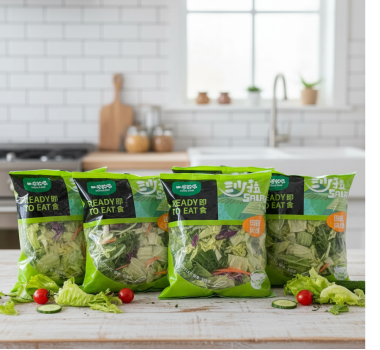
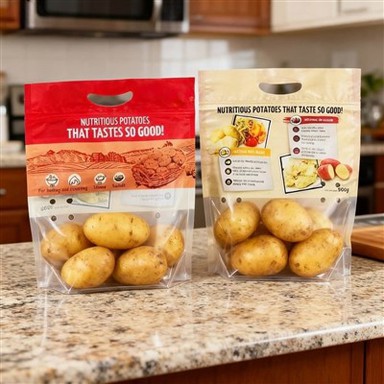
2.Precise air permeability and preservation: scientifically extending shelf life Cleaned and pre-cooked vegetables are still "living" products; they breathe and are prone to spoilage. Packaging permeability (breathability rate) is a core technical indicator. Packaging bags need precise breathability design based on the specific respiration rate of the fruits and vegetables. For example, mixed salad greens and mushrooms require drastically different breathability environments. By using microporous breathability technology and other methods to automatically regulate the oxygen and carbon dioxide concentration inside the bag, anaerobic fermentation and microbial growth can be effectively inhibited, thereby extending the optimal shelf life by more than 30% and significantly reducing spoilage. Convenience and Multifunctionality: Enhancing the End-User Experience Convenience is the core value of ready-to-eat meals, and packaging must match this. Easy-tear designs eliminate the need for consumers to search for scissors; resealable zippers allow unused portions (such as half-eaten bags of vegetables) to be resealed, maintaining refrigeration and hygiene. Furthermore, for some ready-to-eat meals that can be directly microwaved, packaging materials must possess appropriate heat resistance to ensure a seamless transition from refrigerator to microwave.
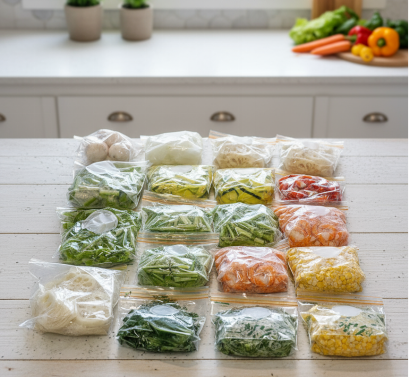
Conclusion: A successful "small package" is a perfect combination of preservation technology, materials science, and user experience design. It's not just a container; it's a crucial element in ensuring product quality, enhancing brand value, and winning consumer trust.As a professional source factory for fruit and vegetable packaging bags, we are committed to providing customized packaging solutions for every pre-prepared and clean vegetable customer. From anti-fog film and microporous preservation to zipper and easy-tear design, we empower your products with technology to jointly seize new market opportunities.