

What are the strengths of PET/PA in terms of barrier properties, freshness preservation, and puncture resistance for food packaging inner films?
Mar 04, 2026
As a source factory with 35 years of experience in the packaging bag industry, we specialize in the production and customization of fruit and vegetable packaging bags. We deeply understand the stringent requirements of the European and American markets for food packaging-barrier properties, freshness preservation, and puncture resistance directly determine the shelf life, transportation safety, and compliance of food. PET (polyester) and PA (nylon/polyamide), as the core preferred materials for our food packaging inner films, have become key to meeting the export demands of Europe and America due to their outstanding performance. Their advantages can be clearly understood through industry data and material characteristics.
Barrier properties are a core element of food packaging, and the barrier strength of PET/PA inner films has been verified through industry testing. Industry data shows that the three main culprits of food spoilage are oxygen, water vapor, and light. Oxygen and water vapor penetration are the primary reasons for shortened shelf life; in high-oxygen environments, the rate of fat oxidation in meat products increases by 5-10 times. The PET inner film selected by our factory has an oxygen permeability as low as 2.8-5 cm³/m²·24h, effectively blocking oxygen and carbon dioxide penetration and preventing food oxidation and spoilage.The PA inner film focuses on oxygen barrier and oil resistance, with oxygen permeability controlled at 15-40cc/m²·day. Its oil barrier properties are superior to most packaging materials, preventing oily foods from penetrating and contaminating the packaging. When used together, these two materials form a double barrier, meeting the core requirements of the European and American markets for food packaging barrier properties, ensuring product quality stability during long-distance transportation and long-term storage.
Addressing the pain points of fruit and vegetable storage with its superior preservation performance, PET/PA inner film can significantly extend shelf life. Data shows that the loss rate of fruits and vegetables in ordinary packaging can reach 20%-25%, while packaging with PET/PA inner film can extend the shelf life of perishable fruits and vegetables such as strawberries and blueberries at room temperature by an average of 3-5 days, reducing the loss rate by more than 15%. For puffed foods such as potato chips, the shelf life in PET/PA composite inner film packaging can be extended from 2-3 months to more than 12 months, far exceeding that of ordinary packaging materials.This is thanks to the high transparency and high and low temperature resistance (-60℃~120℃) of PET material, which can be adapted to various storage scenarios such as refrigeration and room temperature, while reducing the impact of direct light on food; PA material can lock in the moisture and flavor of food, prevent fruits and vegetables from dehydrating and drying out, and prevent the loss of food aroma, perfectly meeting the high requirements of European and American markets for food freshness.
Puncture resistance ensures safe transportation, meeting the needs of long-distance transportation in Europe and America. The trade of food and fruits and vegetables in Europe and America relies heavily on long-distance sea and land transport. Packaging is easily subjected to compression, friction, and puncture, leading to damage, leakage, and food contamination. The PA inner film selected by our factory has extremely high toughness and puncture resistance, with tensile strength far exceeding that of ordinary materials such as PE and PP, effectively resisting punctures and crushing impacts from sharp objects during transportation.PET inner film has excellent mechanical strength, with tensile and tear resistance. When used in combination, the packaging damage rate can be controlled to below 1.5%, which is far lower than the industry average of 5%, fundamentally reducing transportation losses and ensuring that products arrive smoothly in European and American end markets.
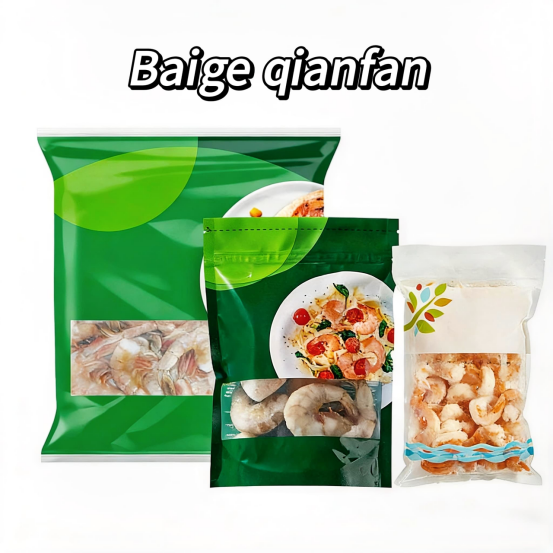
As a 35-year-old original manufacturer, our food packaging outer film commonly uses CPP/PE material, while the inner film is made of PET, PA, and OPP materials. All materials undergo rigorous screening, are free of harmful additives, and comply with relevant European and American food contact material standards, ensuring smooth export customs clearance. We can customize PET/PA inner film packaging of different specifications and functions according to the differentiated needs of European and American businesses, suitable for various scenarios such as fruit and vegetable preservation, cooked food sealing, and fried food packaging. With our material strength and standardized production, we provide European and American businesses with cost-effective and safe packaging solutions.